
Spotting a cockroach in the kitchen at midnight is one of those household moments nobody forgets. The first question is usually how to kill it. The second, especially if you’ve seen more than one, is what professional treatment actually costs and whether it’s worth the money.
The honest answer is that cockroach control costs vary more than most homeowners expect, and the price depends on factors that aren’t always obvious upfront.
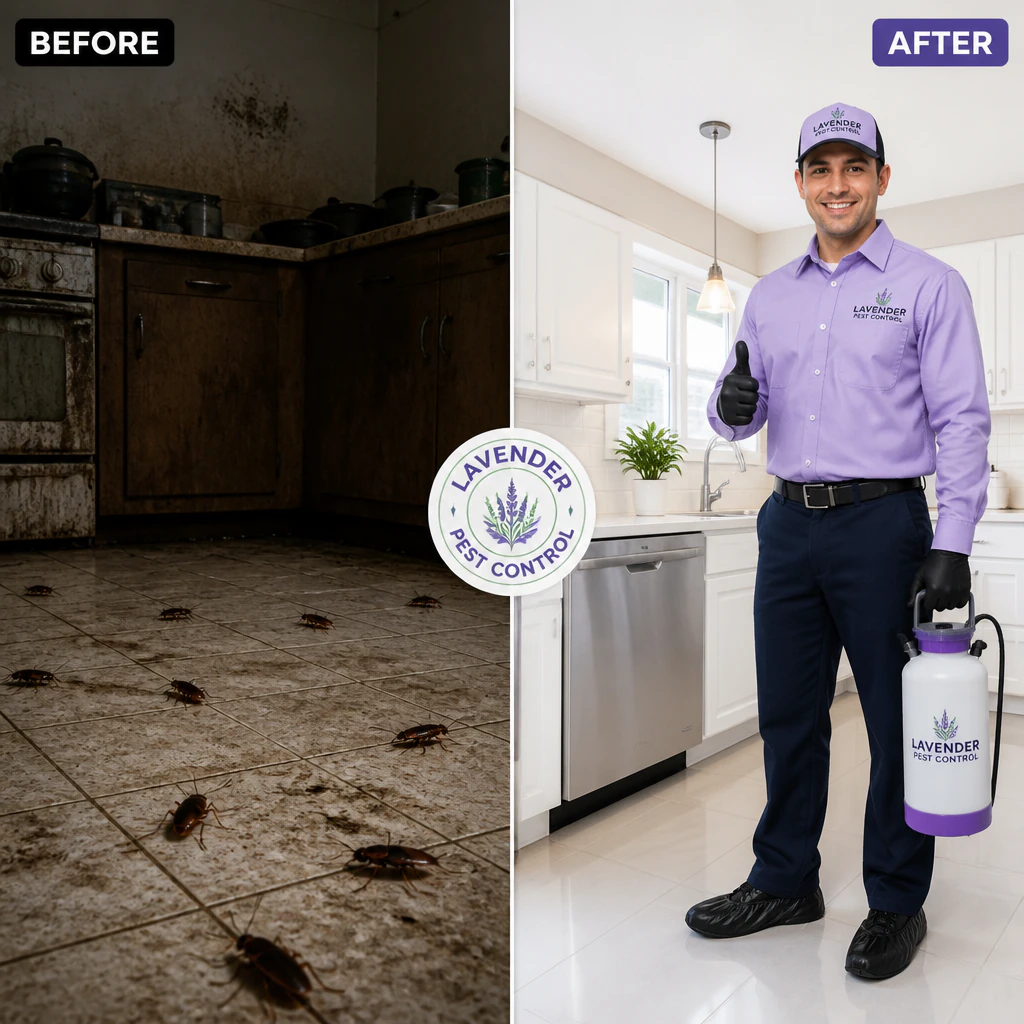
At Lavender Pest Control, homeowners and businesses receive professional pest control services designed to target cockroach problems at the source, helping prevent future infestations rather than simply treating visible pests.
This guide explains what influences cockroach extermination costs, what you can expect to pay in different scenarios, and why choosing the cheapest option is not always the most cost-effective solution in the long run.
 Why Cockroach Infestations Need Professional Attention
First, it’s important to know why a cockroach infestation isn’t something that can be handled with grocery store sprays and insecticides. Cockroaches are hardy in a way that other household pests are not. They have been around for more than 300 million years, they multiply rapidly (one German cockroach female can produce 30,000 offspring per year under optimal conditions), and they quickly become tolerant of common insecticides.
It’s not just about looks either, as there are health risks at stake. The Agency for Toxic Substances and Disease Registry (ATSDR) of the Centers for Disease Control (CDC) has reported that cockroach allergens are one of the most important indoor environmental triggers of childhood asthma, with up to 36% of the population studied being sensitized to cockroach allergens. Proteins from cockroach saliva, droppings, and shed body parts settle into household dust, where sensitive people—especially children—can inhale them and develop respiratory symptoms.
That means cockroach control isn’t just about protecting your property—it’s a health expense for families with children and for anyone with asthma, allergies, or other respiratory conditions.
Average Cost of Cockroach Extermination
Typical professional cockroach extermination in northeast Georgia for a single-family residence will usually fall into one of three brackets.
For a small infestation, a single treatment typically runs $100 to $250. This works for early-stage infestations where you’ve spotted a couple of roaches but don’t yet have a full colony in your walls. The exterminator will find entry points, use baits and crack and crevice treatment, and follow up as necessary.
A moderate infestation typically runs $200 to $500 for the first visit, with later visits either billed separately or folded into a quarterly plan. This is the most typical scenario Lavender Pest Control encounters and typically requires several visits within a couple of weeks to interrupt the cockroach life cycle.
If the infestation is heavy, such as in an older home or multi-unit building with German cockroaches, the cost of the full treatment plan can be $500 to $1,500 or more and can be a long-term process that lasts several months. These cases will need more intensive effort, which may involve baits and residual sprays, growth regulators, and structural recommendations.
National chain exterminators tend to charge at the high end of these ranges and offer annual service contracts that include cockroach control along with other pest management services. Local family-owned businesses will be able to provide more flexible pricing for cockroach work and do not require a year-long contract.
What Drives the Cost Up or Down
A few factors drive what you’ll actually be charged for cockroach extermination, and knowing them helps you evaluate quotes more critically.
Not all roaches are created equal, and most homeowners don’t realize how much the species matters. German cockroaches are the most difficult to eradicate. They multiply rapidly, are found indoors all year round, easily become resistant to pesticides and can be found in the smallest cracks. The larger American cockroach and Oriental cockroach are more likely to be found outside of buildings and do not breed indoors to the same extent, making them easier to control. An exterminator treating a German cockroach infestation will naturally charge more than one dealing with a few American cockroaches that wandered in from the garage.
Both labor and material costs are determined by the size of the infestation. A minor issue may be resolved in one or two visits. A severe infestation, by contrast, can require monthly or even biweekly visits over several months, knocking the population down one generation at a time. Labor cost is reflected in each visit and in the cumulative treatment cost.
Prices are dependent on the size of the home. The amount of time, product, and inspection coverage needed for a 1,200-square-foot ranch and a 3,500-square-foot two-story home is very different. Most pest control companies will charge by square footage, number of stories, and access.
Cost also depends on the methods of treatment. Although fumigation or heat treatments are sometimes needed for severe German cockroach infestations, they are more costly; standard gel baits and crack-and-crevice sprays are less expensive. Insect growth regulators (IGRs) stop young cockroaches from maturing and reproducing; they add to the product cost but can shorten the overall treatment time.
Entry points and structural problems can lengthen the treatment program. Gaps around pipes, worn door sweeps, foundation cracks, and similar openings let roaches keep coming in from outside, so the treatment can’t fully succeed even once the indoor population is cleared. If the exterminator finds them and suggests sealing these entry points, they are doing the right thing, even if it costs more.
What’s Included in a Professional Treatment
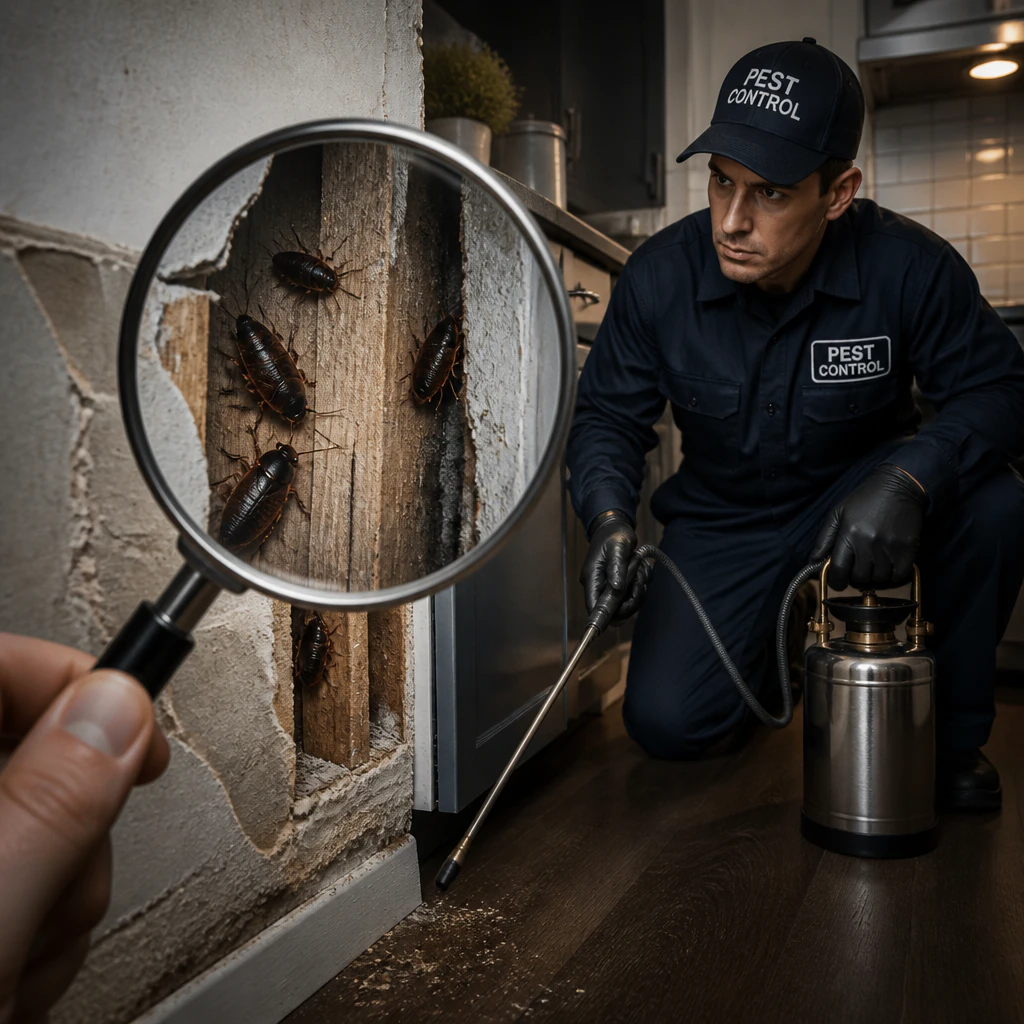
A reputable pest control company will do more than just spray as part of a solid cockroach treatment plan. The first visit should be a comprehensive inspection to determine the species of cockroach, find harborage areas, and determine the magnitude of the infestation. The exterminator should then use a mixture of treatment methods instead of just one product, as cockroach resistance to single-mode products is now common.
Common methods of treatment include gel baits in cracks and crevices where cockroaches are known to travel, residual sprays in areas not used for food, dust treatment in wall voids and electrical boxes, insect growth regulators to interfere with the life cycle, and in some cases, boric acid in specific areas. The mix matters because roaches quickly build resistance to a single type of chemistry, whereas rotating products with different modes of action keeps them from adapting. .
Most professional plans include at least one follow-up visit—sometimes more—to deal with the cockroaches that hatch after the first treatment has knocked down the active population. In general, single-treatment fixes aren’t something you find when you’re dealing with anything more than a minor infestation.
DIY Methods vs. Professional Cockroach Exterminator
The DIY approach is attractive to homeowners who are looking for a budget-friendly solution, and in some cases a small problem can be solved with a mix of boric acid, gel baits from a hardware store, and aggressive sanitation. But the restrictions become apparent very quickly.
Professional formulations are usually more concentrated, and how a product is applied matters as much as the product itself. Store-bought sprays can actually make a German cockroach problem worse, scattering the population deeper into wall voids before the spray takes effect. Bug bombs and total-release foggers are especially infamous for this, as they chase cockroaches into more difficult-to-treat areas without killing the eggs or the deepest hiding adults.
If you’re still seeing roaches after two or three weeks of DIY treatment, the math usually favors hiring a professional. The cost of repeated DIY attempts, plus the professional treatment you end up paying for anyway, often exceeds what it would have cost to hire an exterminator from the start.
Signs of a Cockroach Infestation Worth Treating Professionally
A few signs tell you an infestation has grown past what you can handle on your own.
Cockroaches seen during the day are a good indicator. They’re mostly nocturnal, so daytime sightings usually mean the population has grown large enough that crowding is pushing some out into the open. If you’re seeing them with the lights on, the colony in the walls is far bigger than you’d think.
Droppings—small dark specks resembling ground pepper or coffee grounds—in cabinets, drawers, behind appliances, or along baseboards point to active feeding and a sizable population. Egg cases (oothecae)—small brown or reddish capsule-shaped objects—signal active reproduction. A musty, oily odor in affected areas is another sign the infestation is well established.
If you notice any of these signs, it’s time to contact a professional roach exterminator. The longer the population is left, the more costly and time-consuming the treatment will be.
 How to Choose the Right Pest Control Company
Not every pest control company is equally strong at cockroach work. Termite companies, rodent specialists and general pest contractors all have their strong points. In assessing a roach exterminator, check for state licensing (in Georgia, technicians must be registered with the Georgia Department of Agriculture), written warranties or guarantees on the work, an absence of high-pressure upselling, and a willingness to explain what they’re doing and why.
A good company will explain the treatment plan clearly, name the products it’ll use and how they work, and give you a realistic timeline—and it will provide free follow-up visits if the problem returns while the guarantee is in effect.
Beware of quotes that are much lower than the market average. Comprehensive cockroach work (more than one treatment, follow-up visits, and structural assessment) is costly. A quote well below the typical $200 to $500 for a moderate infestation often signals corner-cutting that shows up as recurring problems down the line.
Moving Forward With Cockroach Extermination
A cockroach problem doesn’t get better on its own. The biology of these insects, their reproductive rate, and their resistance development all work against the homeowner who waits or tries half-measures. The earlier a professional gets involved, the lower the total treatment cost typically runs.
Lavender Pest Control provides cockroach treatment as part of its comprehensive pest control services throughout northeast Georgia. As a family-owned company serving the region since 1977, it employs handpicked technicians who are registered with the Georgia Department of Agriculture and backs regularly scheduled services with a satisfaction guarantee.
When you contact Lavender Pest Control for cockroach treatment, the process begins with a thorough inspection to identify the species involved and determine the extent of the infestation. From there, you’ll receive a clear treatment plan with transparent pricing, so you know exactly what to expect. Treatments are applied using methods designed with the safety of children and pets in mind, and if cockroaches return between scheduled visits, follow-up service is provided at no additional charge.
If you’ve been seeing roaches in your home and want a straight answer on what professional treatment would cost for your specific situation, call Lavender Pest Control at 706-549-8759 or request a free quote online. The conversation costs nothing, and the right treatment plan keeps the problem from getting worse and more expensive.