You find some droppings behind the stove. Then, more near the pantry. Maybe a shredded corner of a cereal box. Most homeowners reach for a snap trap or a box of poison from the hardware store almost immediately, and honestly, that instinct makes sense. The problem is that store-bought solutions handle the mouse you can see, not the infestation you can’t. By the time signs of mice are obvious enough to notice, you’re usually dealing with far more than one or two stragglers.
Lavender Pest Control, a family-owned company serving northeast Georgia since 1977, fields calls constantly from homeowners who tried the DIY route for weeks before reaching out. The pattern is almost always the same: traps catch a few mice, the problem seems to slow, and then it comes right back.
This article explains why that cycle happens and what actually works.
 Why Getting Rid of Mice Is Much More Difficult Than It Seems At First
A hole about the size of a dime is all that’s needed to let a mouse into your home. It’s this small entry size that causes so many do-it-yourselfers to fail, and for good reason.
The two types of mice you’ll most commonly find in Georgia homes are the house mouse and the deer mouse, and they reproduce very quickly. Each adult female mouse can give birth to five to 10 litters of pups per year. So, if you’ve only seen one mouse in your home, chances are good your home may be teeming with rodents.
The other tricky part about mouse infestations is that mice tend to stay close to their nests, usually within 10 to 30 feet from the nest. This means that if you only set a few traps along a perimeter wall and catch three or four mice, but don’t locate the nest itself to eliminate the nest entirely (usually in the wall, under the crawlspace, or behind your refrigerator), your mouse infestation will likely continue as new mice simply move into the home.
It feels like you’re making a difference, but in the grand scheme of things, the infestation remains.
The Health Consequences of a Mouse Infestation
A mouse infestation in your home presents health risks that most homeowners aren’t aware of.
Deer mice have been linked to hantavirus, a virus that leads to hantavirus pulmonary syndrome, a serious respiratory illness, according to the Centers for Disease Control and Prevention (CDC). Even without touching a mouse, just cleaning up their droppings or bedding can lead to this health issue. It’s also common for mice to carry Salmonella, a bacterium that can cause sickness in humans.
The CDC has also issued rodent control tips, noting that when you sweep, vacuum, or mop the dried droppings you find in your home, you may be breathing in particles that can contain bacteria or viruses. Instead, they recommend that you first wet down the area with disinfectant before cleaning it.
These health risks are particularly concerning for children and pets, especially since young children are often close to the ground, and so are many rodent bait and trap stations.
Snap Traps for Mouse Control
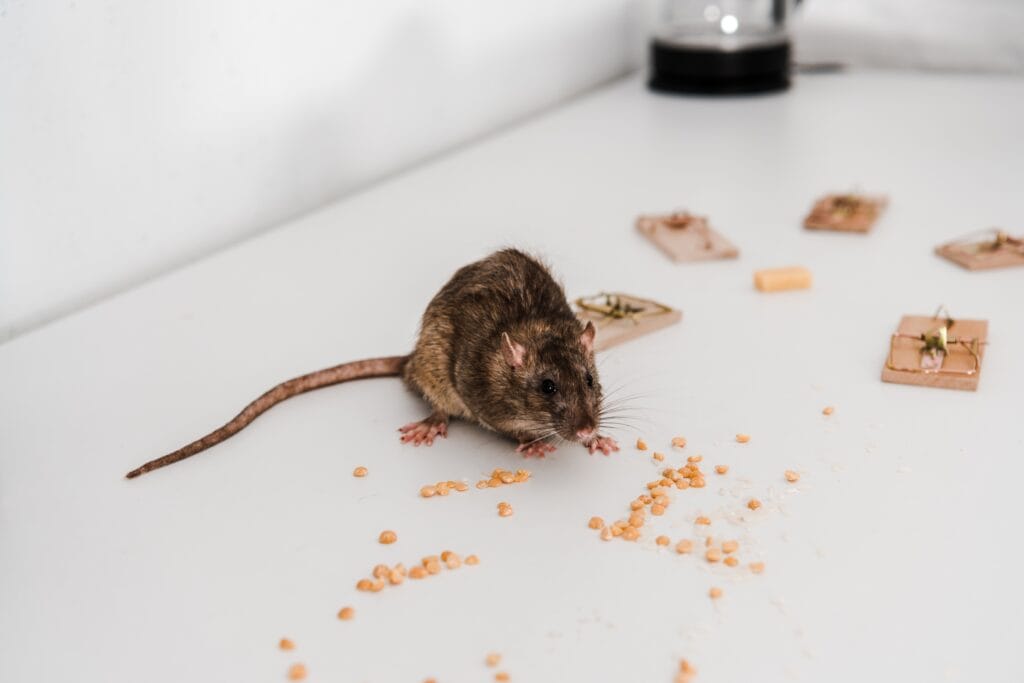
Most people use mouse traps. The trouble is, they don’t use them the right way.
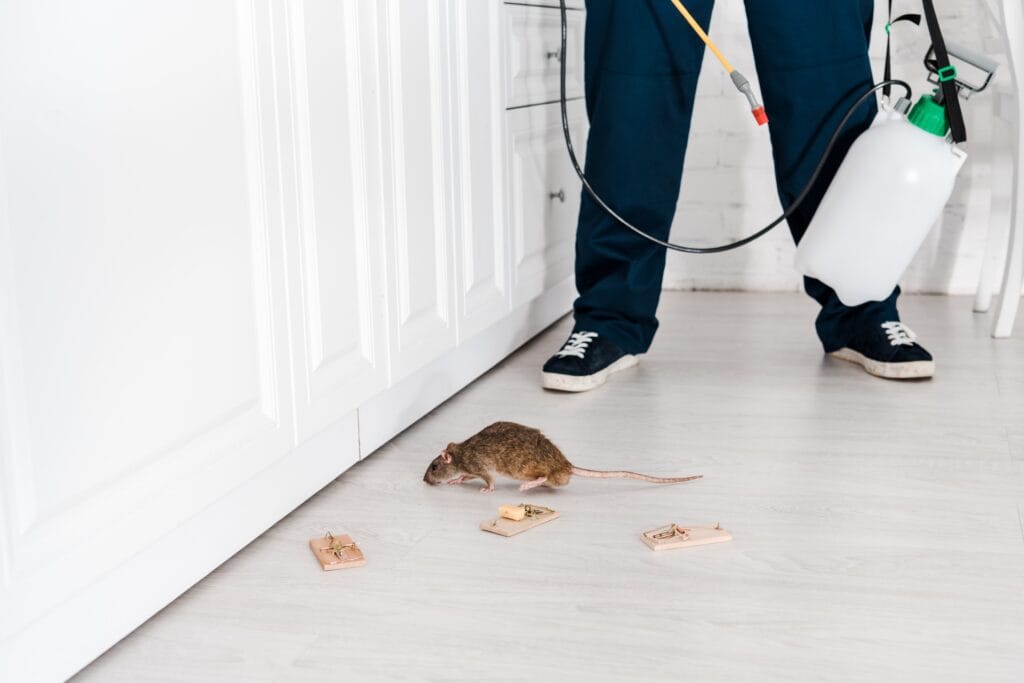
Snap traps must be positioned against the wall with the bait end toward the trigger and the snap end perpendicular to the wall. When snap traps are just set in the open, they do almost nothing, but when they’re placed against a wall, they catch mice. And, as far as bait goes, peanut butter beats cheese, as it always has. A small amount of bait near the trigger also prevents a mouse from stealing the bait without setting off the trap. If you’re catching mice with snap traps at the right spot with the right bait, then you’re getting rid of mice, but you aren’t getting rid of the source of those mice.
Live Traps and Glue Traps
Live traps are a nice idea because nobody likes the thought of hurting or killing a pest. However, it’s essential to release a mouse you’ve trapped more than a mile from your home; otherwise, that mouse will easily return. People often turn to glue traps to remove mice, and they will do the job, but they don’t discriminate against what kind of animal or pet will get stuck. Lizards, birds, and whatever else walks over that trap will get stuck, too. A trapped mouse that goes unnoticed for several days will likely die.
Rodenticides and Bait Stations
Rodenticides are probably where DIY control becomes really dangerous. The consumer bait stations available at stores can cause secondary poisoning when your cat or dog eats a dead mouse that was poisoned by the rodenticide bait. This isn’t just a rare worst-case scenario. It’s happening all around us. The instructions about where to place consumer bait stations in your home are very vague. The bait stations placed by a pest exterminator, though, will be set in locations only a licensed pest technician could find for you.
Sealing Entry Points to Keep Mice Away
Using bait and trapping methods for mouse removal without addressing the entry points is like bailing out a boat without patching the hole. You’ll be bailing forever if the leak stays open. You’ll continue to kill and trap mice forever if you don’t find the holes in your home where the mice can crawl in. Mice have strong teeth and can chew through a lot of things, such as wood, insulation, and some kinds of plastic. However, they don’t typically have to. Mice often find existing openings to enter through: around the drain and hot water lines in your utility room; around where utilities enter the house; through torn window screens; and through open crawl spaces. There are openings into your home that you don’t even know exist.
The garage can also be an easy entry point for a mouse. A mouse can crawl through the gap underneath the garage door and through the holes and gaps around it. There are often open vents around plumbing pipes and other openings in the garage. The garage is a primary entry point for many rodents coming from the outdoors into homes all across the nation. If a mouse crawls through that garage, it now has access to the wall cavities and attic area of your house.
Mice can chew through wood, plastic, and insulation. They can’t chew through copper mesh or sheet metal, which is what a rodent removal service uses to seal entry points. That step is called exclusion. Skip it, and you’re just trapping mice forever. Do it properly, and they stop coming in.
Eliminate Food Sources to Prevent Mice Infestation
People often don’t give due credit to sanitation. A mouse will eat what it can when its food supplies are low. Crumbs left behind from cooking on the floor; an open bag of dog food sitting on the basement floor; bird seeds sitting out on the garage floor; or a compost pile right up against your home—all these attract mice to your home. A thorough cleaning won’t keep a mouse from coming in, but when it does come, it has less reason to stick around.
Some ways to keep a rodent problem at the bottom of your list:
- Use sealed storage containers for your food and pet food
- Store firewood away from the exterior of your home
- Keep garbage in covered bins and stop leaving them right up against the house
- Pull the refrigerator or stove out every few months to clean underneath
There is one more thing that’s important to keep in mind: if rodents have built a nest, an infestation of insects can also occur around that nest. Addressing a mouse issue frequently helps you prevent a secondary pest problem as well.
What Do Professional Mice Exterminators Do?
There’s more to it than the products when it comes to what a professional mouse exterminator offers over a trip to the hardware store. It’s about the inspection.
A professional mouse exterminator doesn’t scatter traps around and hope for the best. They search for active runways, those greasy lines of movement left from rodents moving over and over the same spot. A pro can tell you exactly where the nest is and which openings are being used. Treatments can then be applied to the actual source, and rather than broadly throughout the home.
Lavender Pest Control has been in northeast Georgia since 1977 (with industry roots going back to 1968). Our rat and mouse control services focus on one thing: the safest, most effective method, specific targeting of the harborages, and a built-in follow-up plan. If you see evidence of mouse activity between visits, we return at no additional cost.
Our bait stations are tamper-resistant. Your children and pets can’t reach the bait. And we don’t follow package directions regarding placement; we base placement on what the inspection reveals. This sort of specificity is what makes the difference between a solution that works long-term and one that doesn’t.
Frequently Asked Questions About Professional Mice Control
How can I tell if it’s just one mouse or an infestation?
If you have droppings in a few different areas or have heard scratching sounds in the walls at night, it’s likely an infestation. Shredded material tucked away in places it doesn’t belong also points to a bigger population.
Do your treatments pose a threat to children and pets?
All of Lavender Pest Control’s treatments are placed in harborage areas or the exterior of the home, rather than common spaces where children and pets hang out. Treatments applied outdoors will need to dry before kids and pets have access to those areas.
After you treat, can I keep mice away?
Preventing future infestations requires exclusion work, which involves sealing entry points that mice are using to come in, as well as proper sanitation. Keeping up with inspections after your first service also prevents another population from getting established and helps prevent future infestations.
 When Is the Right Time to Reach Out to a Professional Pest Control Service?
Don’t wait until you see mouse droppings or gnawing on your belongings to call a mouse exterminator. In northeast Georgia, fall is when activity tends to spike as outdoor temperatures drop and rodents look for warmer harborage indoors. If you happen to see a mouse on your property during the day, know that they are nocturnal. If one has ventured out in daylight, that’s usually a sign the nest is overcrowded and forcing them out during daylight hours. Also, if you find urine stains in a cabinet, droppings near your food supplies, behind appliances, or chewing in your walls, these are things that shouldn’t just be left “until next week.”
Contact Lavender Pest Control for a mouse extermination estimate. We handle services for residential and commercial clients in Athens and throughout northeast Georgia. We bring decades of experience to the table and back it up with a satisfaction guarantee for your home or business.