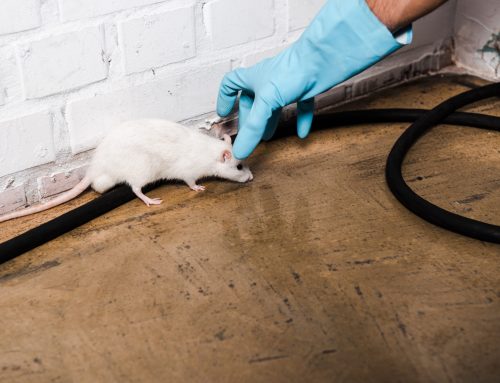
You don't usually see them at first. A gnawed corner on a cereal box, a few dark droppings behind the stove, a faint scratching sound from somewhere in the wall after midnight. By the time most homeowners realize they have a rat problem, the infestation is already well underway.
That's the thing about rodents: they're experts at staying hidden. Knowing how to spot the early signs and acting fast once you do makes an enormous difference in how hard the problem is to fix.
Lavender Pest Control has been helping northeast Georgia homeowners do exactly that since 1977, and its family-owned team has seen just about every scenario a Georgia home can produce.
Types of Rats: What to Know Before You Start Rodent Control
If you're planning to tackle a rat problem yourself, there are a number of DIY options available to you. Before you go shopping, though, it is good to know exactly what species you are dealing with so you do not waste time trying to get rid of the wrong rodent.
The Norway rat, commonly called the brown rat, is larger and more heavily built than most, with a thick body and a blunt nose. They prefer to burrow and are usually found close to the house foundation, in the crawl space, or beneath woodpiles — and unlike some other rodents, they're not very good climbers.
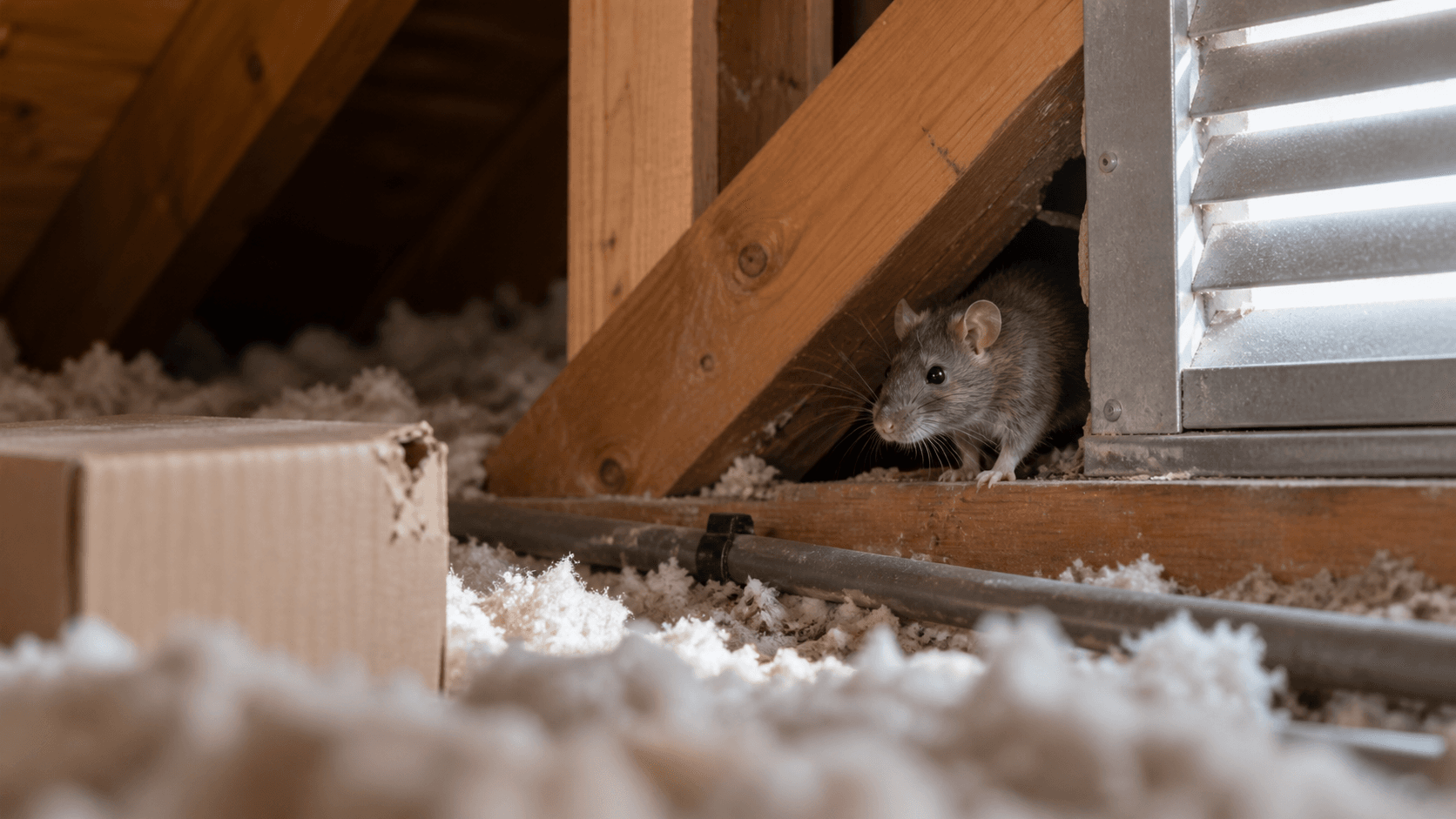
The roof rat is a bit different — smaller, with a longer tail and oversized ears. Unlike brown rats, roof rats are excellent climbers. They spend their lives in the attic or drop ceiling and sometimes travel along the hollow portions of interior walls. They're common throughout Georgia, especially in older homes with easy attic access.
A major point of concern regarding these animals is their high reproduction rate. Each female rat produces about four to six litters annually, and each litter can contain as many as a dozen young rats.
The Centers for Disease Control (CDC) has noted that rodents can carry more than thirty-five illnesses that can be passed on to humans either directly or through the insects they host. Rodent control is an important part of home maintenance and should never be overlooked, especially given the negative impact these pests can have on your family's health.
Signs of Rats and Mice in Your Home
As a homeowner, catching a pest problem early is one of the most valuable things you can do. Here are common signs of a rodent problem in a home.
- Droppings: This is a sure sign that you have a pest problem. Droppings are usually found along the wall or baseboard near where food is kept, and often inside a cabinet. Rodent droppings are capsule shaped. Norway rat droppings are about 3/4 of an inch long. Roof rat droppings are a bit smaller and come to a point at the ends.
- Gnaw Marks: Wood, plastic water pipes, and electrical wiring can all easily be chewed through by rodents. Fresh gnaw marks are light in color but darken over time.
- Grease Rub Marks: These marks tend to appear where rats have walked repeatedly, darkening over time and taking on a greasy sheen.
- Nests: This kind of nesting material is typically made from paper, insulation, and other items found on your property. You will usually find their nests in your attic or jammed behind appliances.
- Noises: Scratching, scurrying, or gnawing sounds that tend to pick up after dark.
Spotting one or two rodents may indicate that you are still early in a rodent infestation, and you can likely treat the problem yourself. However, if you are noticing more consistent rodent activity in different spots throughout your home, a colony of rats has already set up house inside.
Find Rodent Entry Points
It is important to find and seal the points of entry into your home. Rodent holes can be very small; rats can fit through openings as small as a quarter, and mice through holes the size of a nickel. Rats can enter through gaps around dryer vents and cable lines, broken soffits or missing vent coverings, and cracks in the foundation.
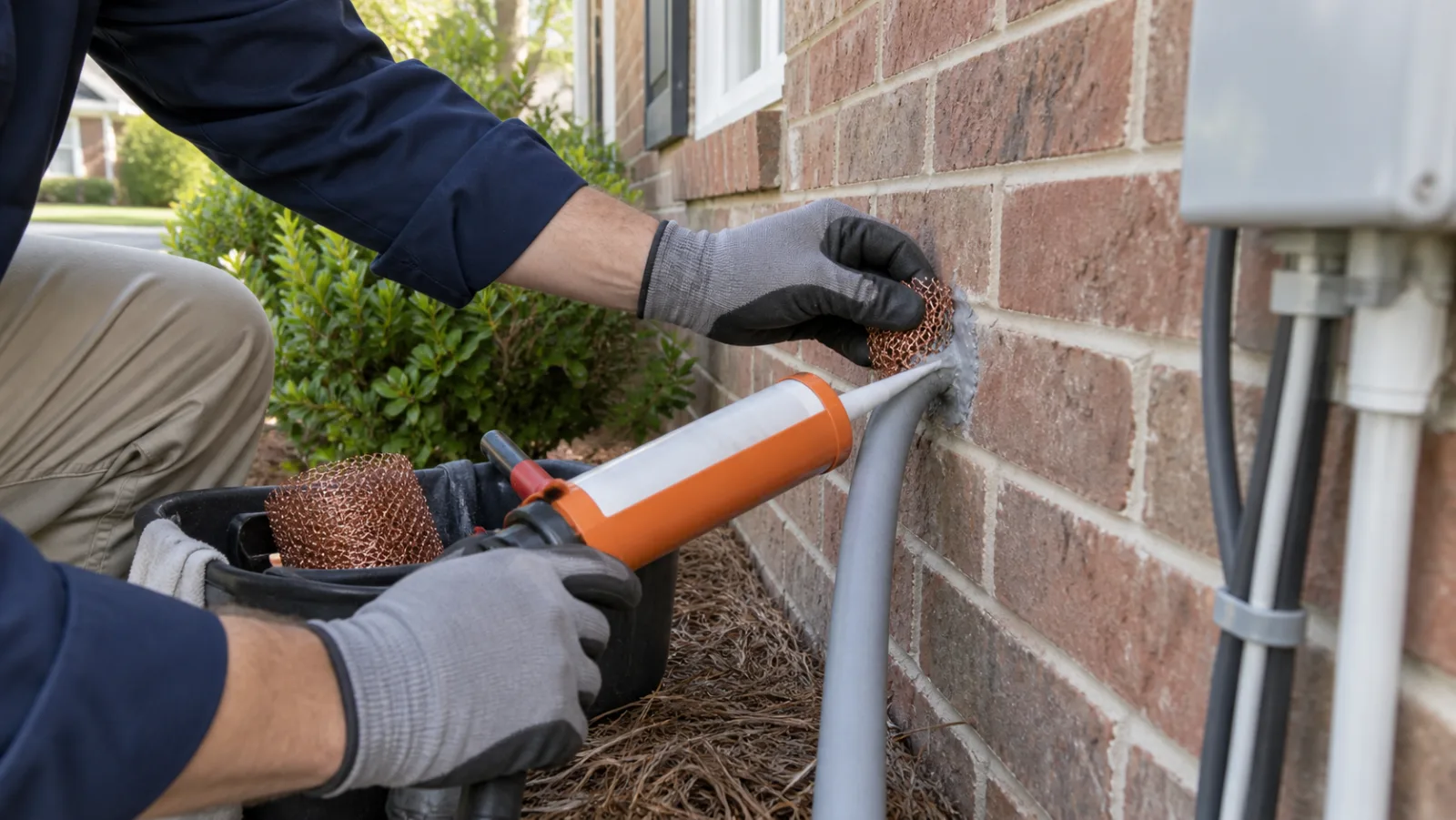
Walk the exterior of your home and check for gaps: Is the cable entry point big enough for a rodent to fit through? Is the roofline flush against the fascia, with an adequate overhang? As a rule of thumb, any gap larger than half an inch is big enough for a rat to enter. To close these holes, try stuffing copper mesh into the openings, then apply caulking. Unlike steel wool, copper does not rust, so you do not need to worry about it losing shape.
Pest Control Products for Rats: Snap Traps, Bait Stations, and Glue Boards
Snap Rat Traps
Snap traps are the traditional method of rat control, and the reason they are still used is that they still work. The important thing to remember is to place them sideways against the wall, because that is the route rats follow when they travel. Bait the traps with peanut butter or bits of nesting material, and don't be sparing with how many you set. It's far more effective to set traps every 10 to 15 feet along a known active runway than to place a single trap in the middle of a room and hope for the best.
Bait Stations And Rodenticide
Tamper-resistant bait stations keep bait safe from children and pets when placed in hard-to-reach locations, while still allowing rats access to the bait. When bait stations are used outside along the perimeter of the property, they're not just recommended — in some cases, they're legally required when applying rodenticides in accessible areas.
Rodenticide should always be handled with caution. Improperly placed bait blocks can contribute to secondary poisoning in owls, hawks, and other predatory birds that consume the poisoned rodents. If you are not sure how or where to place bait blocks, hiring a professional exterminator is recommended.
Glue Boards for Mice and Rats
Glue boards can be effective for monitoring areas of rodent activity. They are not very effective at controlling infestations, and they can cause issues when non-target animals become stuck to the glue. If glue boards are used, they should be checked frequently.
How To Remove Rats From An Attic
For many homeowners, the first sign of roof rats in the attic is gnawed electrical wiring. These pose a fire hazard, and they often go unnoticed until it is too late. Nesting in insulation also reduces its effectiveness, and the moisture that nesting material tends to retain can lead to other problems, like mold.
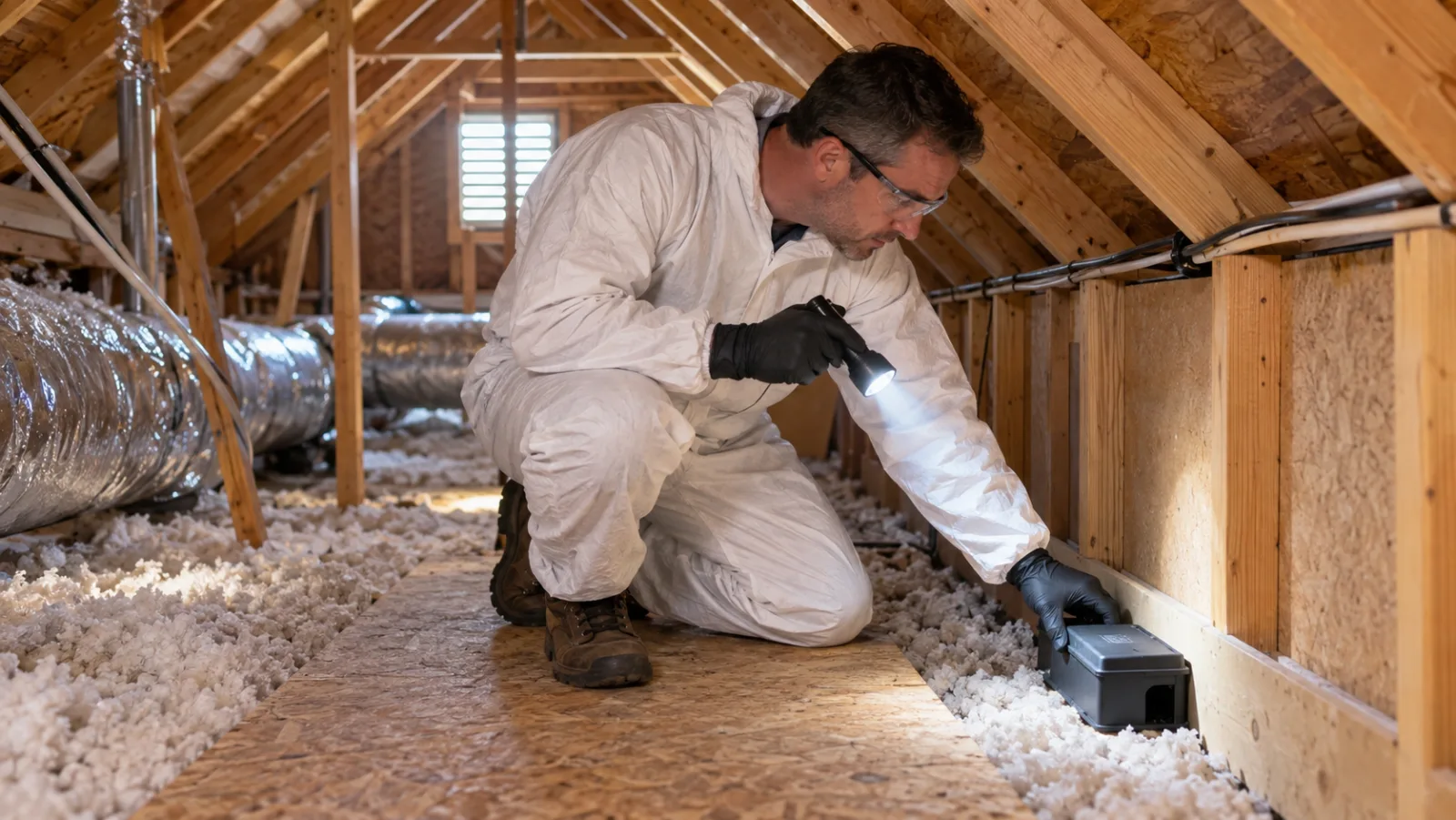
An attic infestation should be controlled by setting traps and baiting stations in the attic and by sealing entry points on the outside. Skipping the seal-out just means new rats keep replacing the ones you trap, instead of actually solving the problem. The rats and mice services at Lavender Pest Control are set up to handle both the trap-out and seal-out for maximum effectiveness.
Prevent Future Problems: Long-Term Home Protection Against Rats
Removing a rat infestation is only part of the process. Preventing them from returning is the other half.
- Store food items in hard-sided containers with tight-fitting lids.
- Stack firewood off the ground on a rack, keeping it away from the house.
- Clear away brush piles, debris, and excessive vegetation from around the outside of the foundation.
- Inspect garage door seals and replace weather stripping if damaged or degraded.
- Store pet food in tight-fitting containers and bring pet bowls inside overnight.
Removing available food sources and shelter, while performing an exterior seal-out, sets you up for long-term rodent removal instead of just addressing the immediate problem at hand.
When to Call a Rodent Exterminator
DIY rodent control can work out just fine, particularly if the problem is caught at an early stage and the rodent population is relatively small. If traps are filling up every night, if you're finding active nests in the walls or attic, or if you can't locate the entry point no matter how hard you look, it's time to call in the professionals.
The rat control experts at Lavender Pest Control have been serving Athens and the surrounding community since 1977. Give them a call at (706) 549-8759 to request a free quote for a full inspection, treatment, and seal-out to get rid of rats for good.